Add up the first five minutes of every meeting in your company — the cable hunt, the “can you hear us?”, the guest who cannot cast a screen — and you will find days of senior salary evaporating every month. Meeting room technology is not about impressing visitors; it is about deleting that ritual.
The anatomy of a room that just works
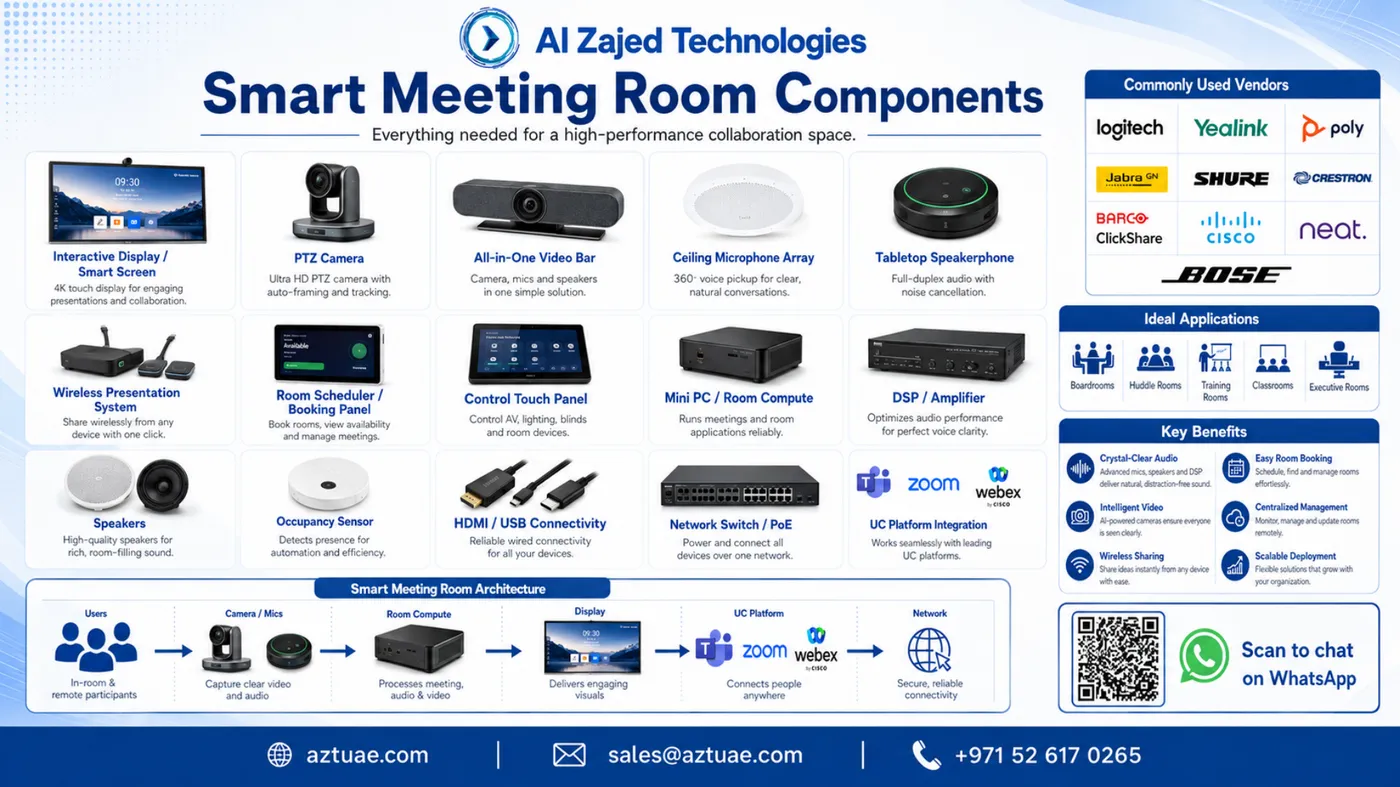
- One-touch join — the calendar invite appears on the room panel; one tap starts the call on Teams or Zoom.
- PTZ camera with auto-framing — the camera finds the speakers; remote participants stop watching an empty end of the table.
- Ceiling microphone array — every seat heard equally, no pucks passed around.
- Wireless presentation — laptops and phones cast instantly, guests included, no dongles walking away.
- Room scheduling panel — occupancy shown at the door, ghost bookings released automatically.
- DSP audio & UC integration — echo cancellation tuned to the actual room, not factory defaults.
Why rooms fail
Almost never because of cheap hardware — usually because components were bought separately and never engineered together: a good camera on bad audio, a soundbar fighting room acoustics, cables terminating nowhere. Rooms are systems; they need a system designer and, just as importantly, someone accountable when one thing misbehaves.
The honest path
Pick your worst room and fix it properly as a reference. Once your team feels the difference, the rollout scope writes itself — and every room after the first gets cheaper.